Category: Book Recommendation

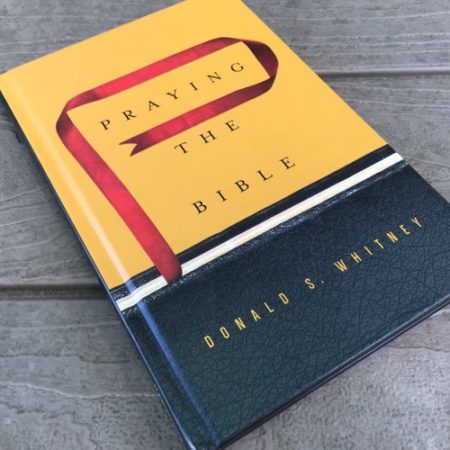
  • Book Recommendation: Praying the Bible by Donald Whitney

    Book Recommendation: Praying the Bible by Donald Whitney

    Something I recommended in my recent sermons on the spiritual discipline of prayer was praying through the model prayers of Scripture. I mentioned that I started this practice myself in seminary and that praying this way has reshaped my prayers to be more biblical. Well, the catalyst for my beginning to pray this way was an excellent book I read by Donald Whitney called Praying the Bible. The book is relatively short (112 pages and with big font), easy to understand, and extremely practical in showing a more rewarding way to pray than what we often use. I commend Whitney’s book and method to you as a wonderful aid to your own prayer lives.

    Below, to whet your appetites, I’ve included the seller’s description, a book excerpt, and a link to free, short videos from Donald Whitney explaining and showing how you can pray the Bible.

    Description:
    All Christians know they should pray, but sometimes it’s hard to know how—especially if the minutes start to drag and our minds start to wander. Offering readers hope, encouragement, and the practical advice they’re looking for, this concise book by professor Donald Whitney outlines a simple, time-tested method that can help transform our prayer lives: praying the words of the Bible. Praying the Bible shows readers how to pray through portions of Scripture one line at a time, helping us stay focused by allowing God’s Word itself to direct our thoughts and words. Simple yet profound, this resource will prove invaluable to all Christians as they seek to commune with their heavenly Father in prayer each and every day.

    Excerpt, pp. 38-39:
    That’s it. If you are praying through a psalm, you simply read that psalm line by line, talking to God about whatever thoughts are prompted by the inspired words you read. If your mind wanders from the subject of the text, take those wandering thoughts Godward, then return to the text. If you come to a verse you don’t understand, just skip it and go to the next verse. If you don’t understand that one, move on. If you do understand it but nothing comes to mind to pray about, go to the next verse. If sinful thoughts enter in, pray about them and go on. You may read twenty or thirty verses in that psalm, and yet on a given day have only five or six things come to mind. No problem. Nothing says you have to pray over every verse. Nothing says you have to finish the psalm.

    I was teaching this method at a church in Santa Rosa, California, and gave the people an opportunity to try praying through a passage of Scripture. One woman prayed for twenty-five minutes and never got past “The LORD is my shepherd.” For nearly half an hour she talked to the Lord about those five words. Do you think that in heaven the Lord was saying, in a huff, “You didn’t finish the psalm!”? No, I think he was delighted that she found so much delight in him as her shepherd that she could talk to him for twenty-five minutes about that, regardless of whether she prayed through the rest of the psalm. At other times, though—and this is probably more common—you will go through many verses and only a few matters will come to mind. Fine; just keep turning the page.

    Videos
    Praying the Bible with Don Whitney (YouTube)
    Praying the Bible with Don Whitney, Day 1 (YouTube)
    Praying the Bible with Don Whitney, Day 2 (YouTube)
    Praying the Bible with Don Whitney, Day 3 (YouTube)
    Praying the Bible with Don Whitney, Day 4 (YouTube)
    Praying the Bible with Don Whitney, Day 5 (YouTube)

  • Book Recommendation: Shepherding a Child’s Heart by Tedd Tripp

    Book Recommendation: Shepherding a Child’s Heart by Tedd Tripp

    Considering Sunday’s sermon, I wanted today to recommend to you one of my favorite Christian books: Shepherding a Child’s Heart by Tedd Tripp. Though I am not yet a parent, I read this book on parenting as part of my biblical counseling training courses at seminary. I was genuinely blown away by the simple wisdom of what I read. Tripp writes in a clear, thoughtful, and engaging way as he explains how the Bible is a sufficient resource for parents and what faithful Christian parenting looks like. Tripp addresses not only the fundamental principles that should equip and guide Christian parents but also the practical outworking of those principles in topics like communication, discipline, and stages of childhood. I know many Christian parents who have loved and benefitted from this book, and I gladly recommend it to you as well.

    To whet your appetite, here is the publisher’s description:

    Shepherding a Child’s Heart is about how to speak to the heart of your child (Luke 6:45). Written for parents with children of any age, this insightful book provides perspectives and procedures for shepherding your child’s heart into the paths of life.

    In this revised edition, Dr. Tedd Tripp draws on his thirty years experience as a pastor, counselor, school administrator, and father, and shares insights gained in many years of teaching this material in conferences worldwide.

    Here also is an excerpt from the book’s introduction:

    Today’s parents are frustrated and confused. Children don’t act like they should and parents don’t understand why. Many have concluded the job is impossible. Some simply turn away in frustration. Others keep trying to make the old 1950s John Wayne approach [(“you listen to me, kid, or I’ll cuff you”)] work. Meanwhile, a generation of children is being wasted.

    Our evangelical culture is nearly as lost as the society at large. We are losing our children. Parents of little children live in mortal fear of adolescence. Parents of teens continually remind them that their day is coming. When I had three teenage children, people would console me. The expectation is that the problems grow with the children.

    This book, however, asserts hope for the situation. You can raise children in godly ways at the beginning of the 21st century. You need not—indeed, you dare not—cave in, concluding that the task is impossible. Experience may tell you failure is inevitable, but experience is an unsafe guide.

    The only safe guide is the Bible. It is the revelation of a God who has infinite knowledge and can therefore give you absolute truth. God has given you a revelation that is robust and complete. It presents an accurate and comprehensive picture of children, parents, family life, values, training, nurture, and discipline—all you need to be equipped for the task of parenting.

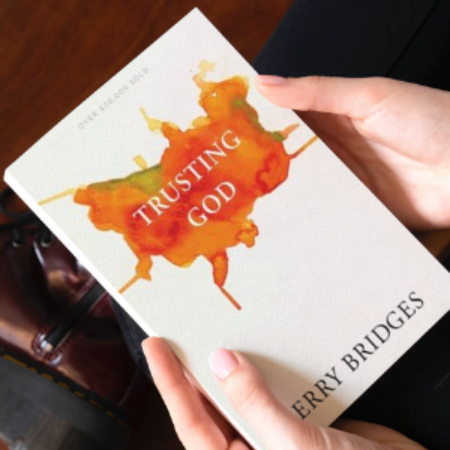
  • Book Recommendation: Trusting God by Jerry Bridges

    Book Recommendation: Trusting God by Jerry Bridges

    One of the most basic human struggles we find both in the Bible and in our Christian lives is the struggle to trust God. Life is hard and full of uncertainty. Moreover, when tragedy does strike, we often cannot discern any good purpose in the terrible event. Our hearts, therefore, are constantly tempted towards worry, anger, and hopelessness as our souls ask, “Can I really trust God?”

    That’s the question that Jerry Bridges (late Christian author and leader in The Navigators ministry) seeks to answer in his book, Trusting God. This is a book that I had had commended to me several times before but which I only made time to read recently. I wish I had read this book sooner. Bridges has done truly excellent work in producing a biblical, insightful, and relatable treatment of such a fundamental issue of the Christian life. At 368 pages in Amazon’s paperback version, the book will require an investment of your time. But this is an investment that will pay great dividends, and the pages go quickly. In his summary of biblical teaching about trusting God, Bridges arms the reader to face well the difficulties of life and even rejoice and give thanks to God through them.

    Below I’ve included the publisher’s description as well as an excerpt from the book. I hope these will whet your appetite so that you benefit from the gift of Christ to his church that is this book!

    Publisher Description:

    Why is it easier to obey God than to trust Him?

    Because obeying God makes sense to us. In most cases, His laws appear reasonable and wise, and even when we don’t want to obey them, we usually concede that they are good for us. But the circumstances we find ourselves in often defy explanation. Before long, we begin to doubt God’s concern for us or His control over our lives. We ask, “Why is God allowing this?” or “What have I done wrong?”

    During such a time of adversity, Jerry Bridges began a thorough Bible study on the topic of God’s sovereignty. What he learned changed his life, and in Trusting God he shares the fruit of that study. As you explore the scope of God’s power over nations, nature, and even the details of your life, you’ll find yourself trusting Him more completely―even when life hurts.

    Excerpt from “Chapter 4: God’s Sovereignty Over People”

    Why then do we suffer such disappointment when the hoped for favor that we needed from another person doesn’t materialize? Why do we struggle with resentment and bitterness when someone else’s decision or action adversely affects us? Is it not because it is our plans that have been dashed, or our pride that has been wounded?

    I once attended a seminar on the subject of Christians and stress. One of the speaker’s main points was that if we want to live less stressful lives, we must learn to live with a single agenda: God’s agenda. He pointed out that we tend to live under two agendas, ours and God’s, and the tension between them sets up stress.

    I think his expression—a single agenda—aptly applies to our discussion of trusting God in the arena of other people’s decisions in our lives. God is sovereign over people. He will move their hearts to cause them to do His will, or He will restrain them from doing anything contrary to His will. But it is His will, His agenda for our lives that God will guard, protect, and advance. We must learn to live by His agenda if we are to trust Him.

  • Book Recommendation: The Knowledge of the Holy by A. W. Tozer

    Book Recommendation: The Knowledge of the Holy by A. W. Tozer

    One of the most profitable spiritual exercises for a Christian is a systematic study of the attributes of God. After all, the Bible reveals that beholding the Lord’s glory both gives us joy and transforms us to be more like him (Ex 33:18; Ps 27:4; 2 Co 3:18). But undertaking such a study of God can feel daunting or academic. Therefore, I am grateful for books like A. W. Tozer’s The Knowledge of the Holy.

    Tozer was an evangelical pastor and author who lived during the first half of the 20th century. He wrote numerous books, but his most famous is probably The Knowledge of the Holy. Before seminary, I kept finding this book on the recommended reading lists of pastors that I admired, so I expected the book to be some heavy and scholarly tome. In fact, the book is quite modest and accessible. A version on Amazon is only about 160 pages (a free version is available here), and while the writing is precise and poignant, Tozer writes for the average Christian.

    Here’s an excerpt from Tozer’s chapter on God’s eternity. Note the connection between Tozer’s words and our recent introduction to Ecclesiastes.

    We who live in this nervous age would be wise to meditate on our lives and our days long and often before the face of God and on the edge of eternity. For we are made for eternity as certainly as we are made for time, and as responsible moral beings we must deal with both.

    “He hath set eternity in their heart,” said the Preacher, and I think he here sets forth both the glory and the misery of men. To be made for eternity and forced to dwell in time is for mankind a tragedy of huge proportions. All within us cries for life and permanence, and everything around us reminds us of mortality and change. Yet that God has made us of the stuff of eternity is both a glory and a prophecy yet to be fulfilled…

    …The ancient image of God whispers within every man of everlasting hope; somewhere he will continue to exist. Still he cannot rejoice, for the light that lighteth every man that cometh into the world troubles his conscience, frightening him with proofs of guilt and evidences of coming death. So is he ground between the upper millstone of hope and the nether stone of fear.

    Just here the sweet relevancy of the Christian message appears. “Jesus Christ … hath abolished death, and hath brought life and immortality to light through the gospel.”…God’s eternity and man’s mortality join to persuade us that faith in Jesus Christ is not optional. For every man it must be Christ or eternal tragedy.

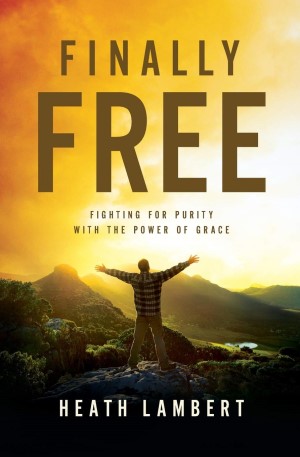
  • Book Recommendation: Finally Free by Heath Lambert

    Book Recommendation: Finally Free by Heath Lambert

    We looked earlier this week at 1 Corinthians 6:12-20 and the importance of fleeing immorality and glorifying God with our bodies. As a follow-up, I wanted to share about a book that has proved useful to me in counseling.

    Though temptations to immorality appear in various forms in our society, no sexual temptation is probably more common or more successful than the temptation to indulge in pornography. Pornography is extremely easy to access (even when not looking for it) and presents itself as a private way to indulge without any strings attached. The reality is, of course, that pornography destroys and enslaves like all forms of immorality. Many people, even Christians, find themselves caught up in pornography with little hope of ever being free.

    But there is always hope in Christ. In his book, Finally Free: Fighting for Purity with the Power of Grace, Heath Lambert distills the Bible’s teaching on sexual purity in a very engaging and practical way. What stands out to me as so important in this book is that Lambert doesn’t simply focus on the consequences of sexual sin but on the transforming grace of Christ and joy of walking in holiness with God. I highly recommend this book for anyone struggling with pornography or anyone trying to help someone else who is struggling.

    Here is a link to the book on Amazon, though it is available elsewhere. May this resource be a benefit to you as you take seriously the Lord’s word in 1 Corinthians 6:12-20.

    Finally Free Cover

    From the publisher:

    If you have struggled personally against the powerful draw of pornography, or if you have ever tried to help someone fighting this battle, you know how hard it is to break free. But real freedom isn’t found by trying harder to change. Nor is it found in a particular method or program. Only Jesus Christ has the power to free people from the enslaving power of pornography.

    In Finally Free, Dr. Heath Lambert, a leader in the biblical counseling movement, lays out eight gospel-centered strategies for overcoming the deceitful lure of pornography. Each chapter clearly demonstrates how the gospel applies to this particular battle and how Jesus can move readers from a life of struggle to a life of purity.

    If you or someone you care about is fighting this battle, there is good news: No matter how intense or long-standing the struggle, Jesus Christ can, will, and does set people free from the power of pornography.