Summer schedule: 9AM Sunday School, 10AM refreshments, and church fellowship meals take a break in July & August. Please join us for Worship Service, which is still held every Sunday at 10:30 AM!

Category: Bible

  • Israel Study Trip Day 6 (and 7): Mount of Olives

    Israel Study Trip Day 6 (and 7): Mount of Olives

    Shalom!

    Today was a breezy and much cooler day—perfect for finally getting to visit the Mount of Olives! Here are a few highlights from today:

    Mount of Olives
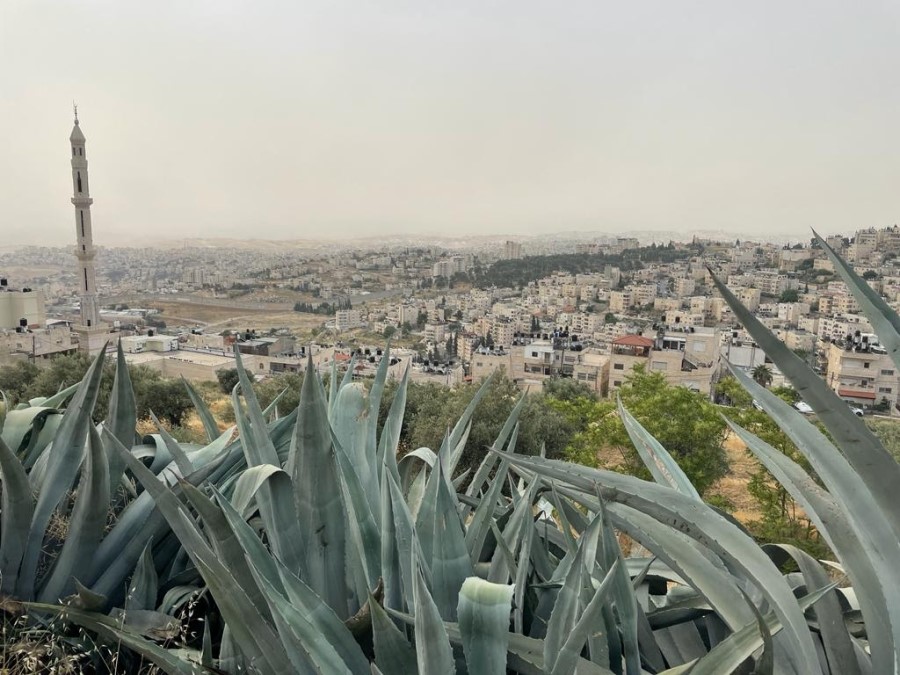
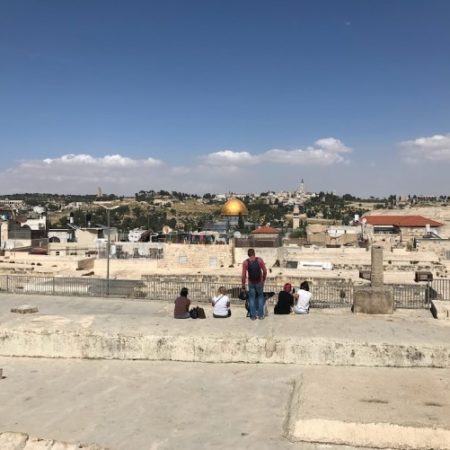
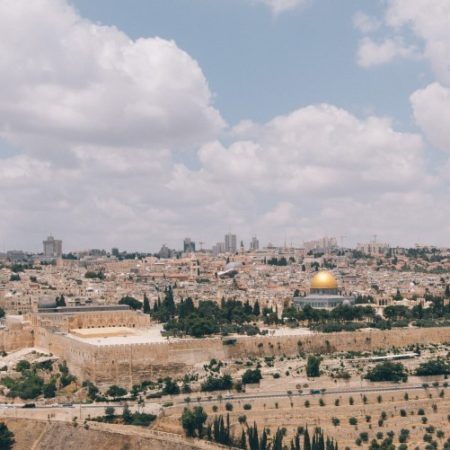
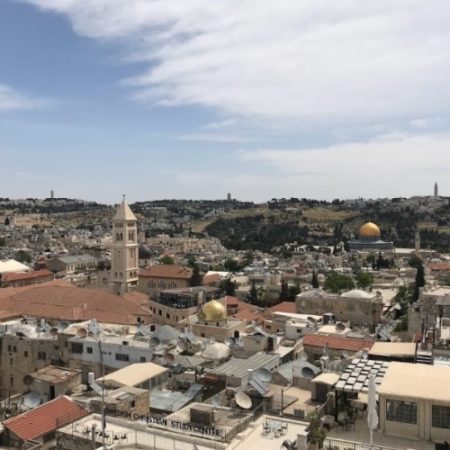
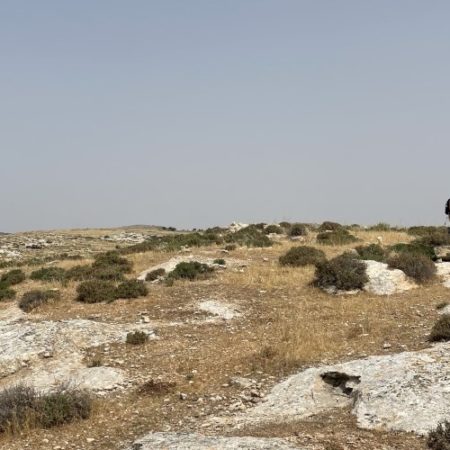
    Just east of Jerusalem across the Kidron Valley, the Mount of Olives (see cover photo) is taller than either hill of Old Jerusalem and essentially divides the Judean hill country from the Judean wilderness to the east. Many biblical events take place on or from the Mount of Olives, including: King David’s flight from Absalom (2 Sam 15:30), Jesus’ triumphal entry into Jerusalem (Mt 21:1-11), Jesus’ Olivet Discourse (Mt 24:1-25:46), Jesus’ Ascension (Lk 24:50-51; Acts 1:9, 12), and Jesus’ return (Act 1:10-11; Zech 14:3-5). Dr. G led us to a view from the back of the mountain looking toward ancient Bethany and Bethphage (first photo) and then from the front of the mountain looking toward Jerusalem (second photo).

    Gethsemane
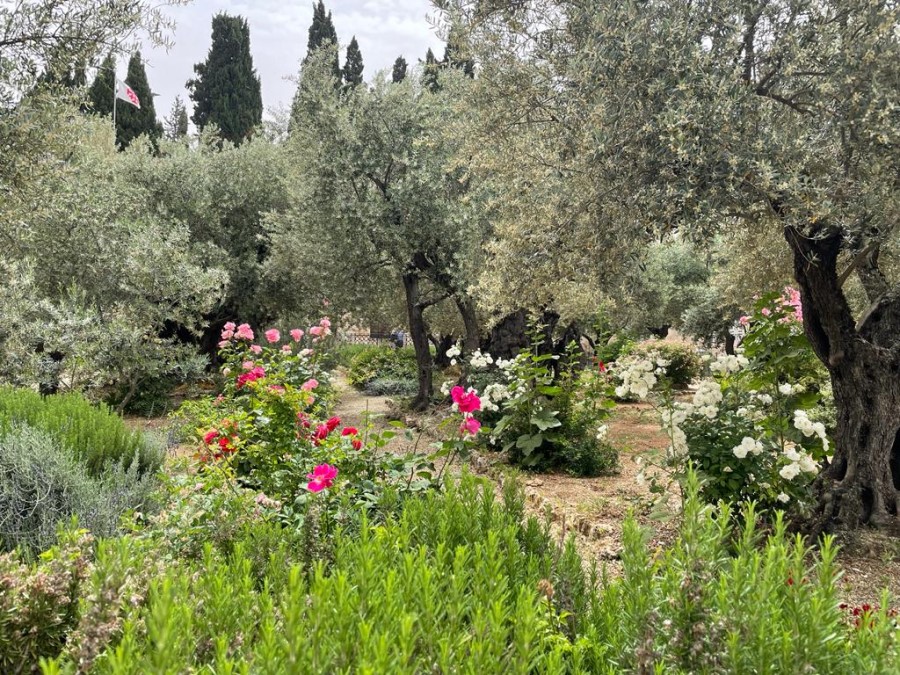
    As we came down the Mount of Olives toward Jerusalem, we stopped at the Garden of Gethsemane. The name “Gethsemane” comes from Aramaic and means “oil press,” likely indicating that the “garden” Jesus and his disciples visited was more specifically an olive grove with a press (Mt 26:36; John 18:1). There were a few olive presses at the base of the Mount of Olives in Jesus’ time, so there are multiple possibilities for the true site of Gethsemane today. We went to the traditional location that has slightly more historical attestation than the others. While the olive trees of the modern garden are old (transplanted by crusaders around AD 1100), they are probably not from Jesus’ time; the Romans besieging Jerusalem in AD 70 would have used up the olive trees of Gethsemane for campfires and siege machines. It was in Gethsemane, of course, that Jesus prayed in agony before his crucifixion and was betrayed by Judas (Mt 26:36-56).

    Israel Museum
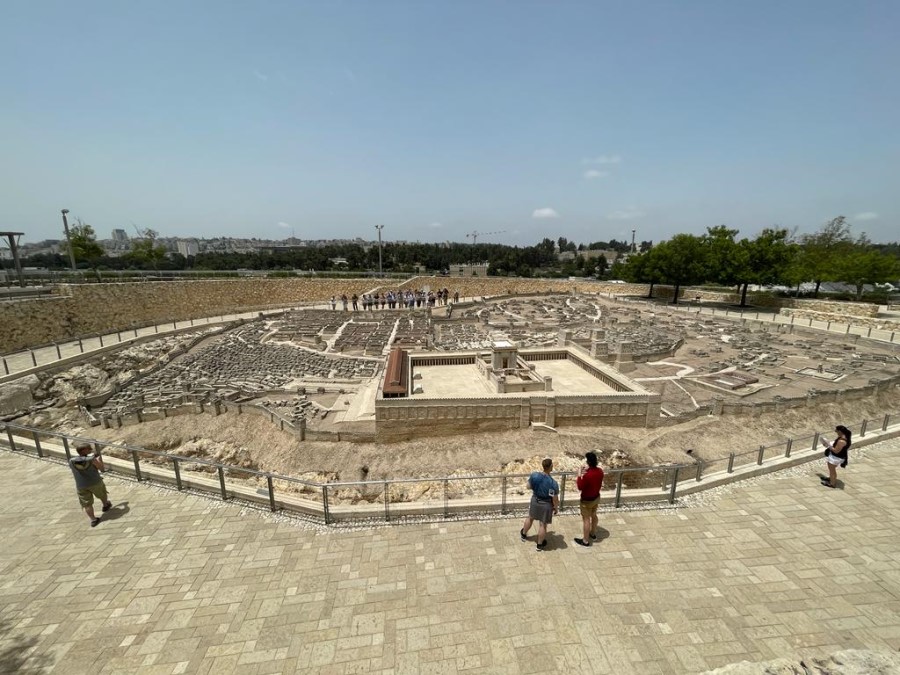
    During our afternoon, we visited the Israel Museum in West Jerusalem (i.e. outside the old city). Though the Israel Museum features much notable art and archaeology, we spent our time there focused on the detailed outdoor model of AD 67 Jerusalem (pictured), the Shrine of the Book (an exhibit dedicated to the Dead Sea Scrolls), and the archaeology of the land of Israel. In the archeological wing of the museum, Dr. G highlighted and gave historical context to a number of important archaeological finds, including: the Masseboth of Hazor (standing stones part of Canaanite pagan worship, cf. Josh 11:1-13; Judges 4:1-24), the Tel Dan Stele (fragment of a boastful 9th century BC proclamation from King Hazael of Syria in which he mentions King Joram/Jehoram of Israel and King Ahaziah of “the house of David,” cf. 2 Ki. 9:14-28), and the Tel Arad Holy of Holies (a sad testimony to syncretistic worship in the kingdom of Judah, cf. Josh 12:14; Judges 1:16).

    That’s all for today! Tomorrow is our last day in Jerusalem and a free day. Therefore, Ema and I will be taking time to recharge and refresh; there will not be a post tomorrow. But, Lord willing, I will be back in two days reporting about our first foray into the Negev.

    Lehitraot!
  • Israel Study Trip Day 5: North of Jerusalem

    Israel Study Trip Day 5: North of Jerusalem

    Shalom!

    Today was all about exploring the circle of ancient cities just north of Jerusalem (on what is called “the Central Benjamin Plateau”). Since these cities formed an important economic and strategic crossroads, many OT events took place on this plateau. Here are a few highlights from our investigation today:

    Gibeah

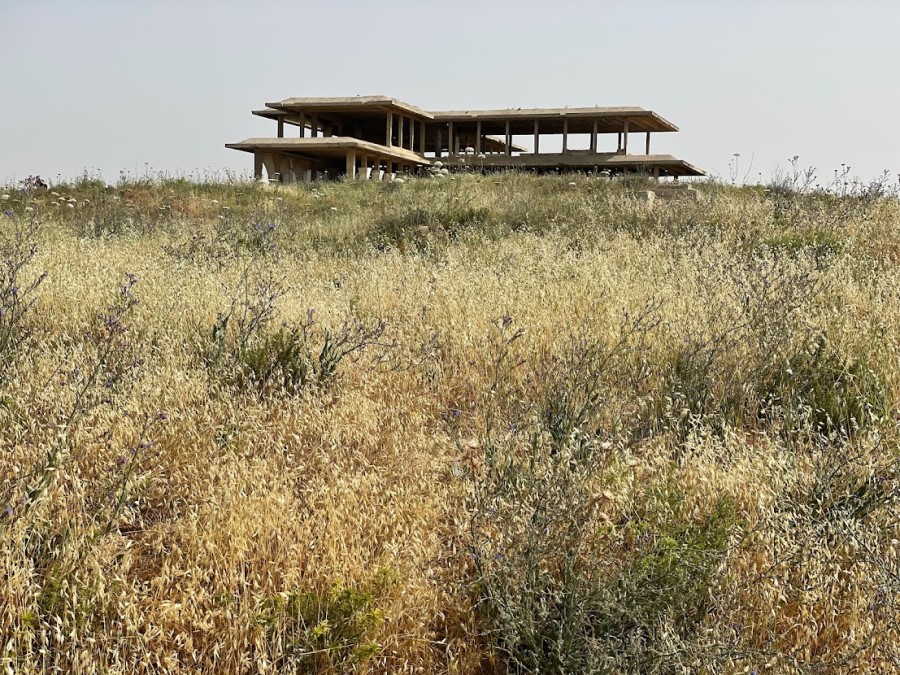
    We started our day visiting Tel el-Full just north of Jerusalem (a “tel” or “tell” is an archaeological term borrowed from Arabic for a mound covering an ancient ruin). Tel el-Full is the mound covering Gibeah of Benjamin, a somewhat infamous city in the OT as the site of Sodom-level depravity (see Judges 19-21) and as the hometown and capital city of King Saul (1 Sam 10:26). Archaeologists have discovered the remains of a palace-fortress here of the same time period the Bible describes as Saul’s kingship. Today, however, the mound is topped by King Hussein of Jordan’s unfinished royal palace, abandoned after Jordan’s defeat in the 1967 Six-Day War.

    Geba-Michmash Pass

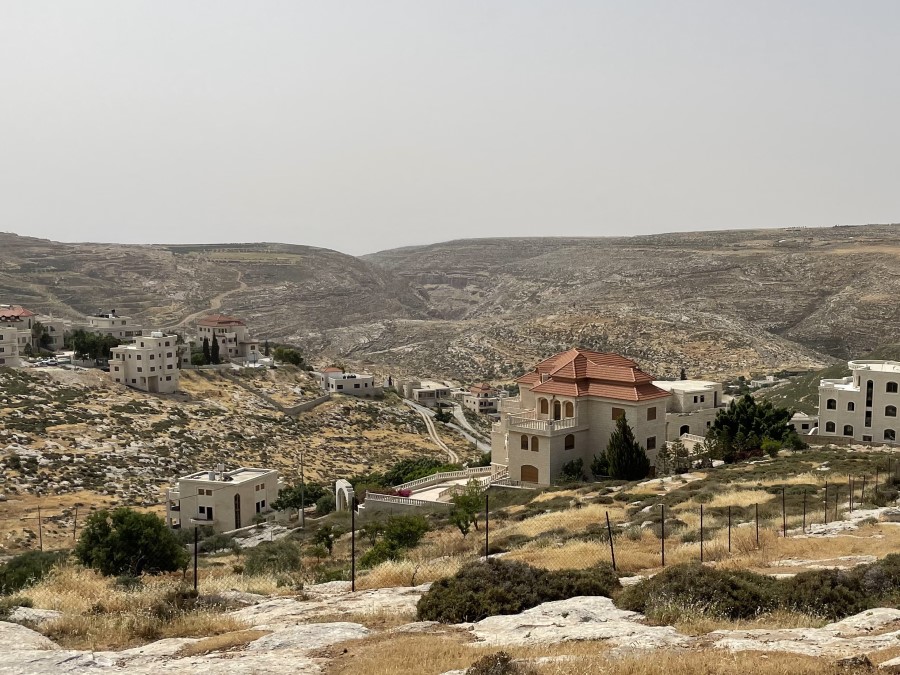
    On the eastern edge of the Central Benjamin Plateau is the highly strategic pass between the ancient Benjamite cities of Geba and Michmash. This pass was the only level crossing for many miles between two otherwise deep sections of canyon; even today, the road between modern Geba and Michmash uses this one pass. The Philistines once greatly threatened Israel under Saul by taking control of Michmash on the opposite side of the pass, essentially beginning to encircle and choke out Saul’s kingdom (1 Sam 13:5-7). However, Saul’s son Jonathan, in a feat of great courage, strength, and faith in Yahweh, climbed down the Geba side of the canyon (right side in picture above) and up the Michmash side (left side in the picture above) with his armor bearer to strike a Philistine outpost, beginning a panic that ultimately lead to Philistia’s defeat (1 Sam 14:1-23).

    Gezer

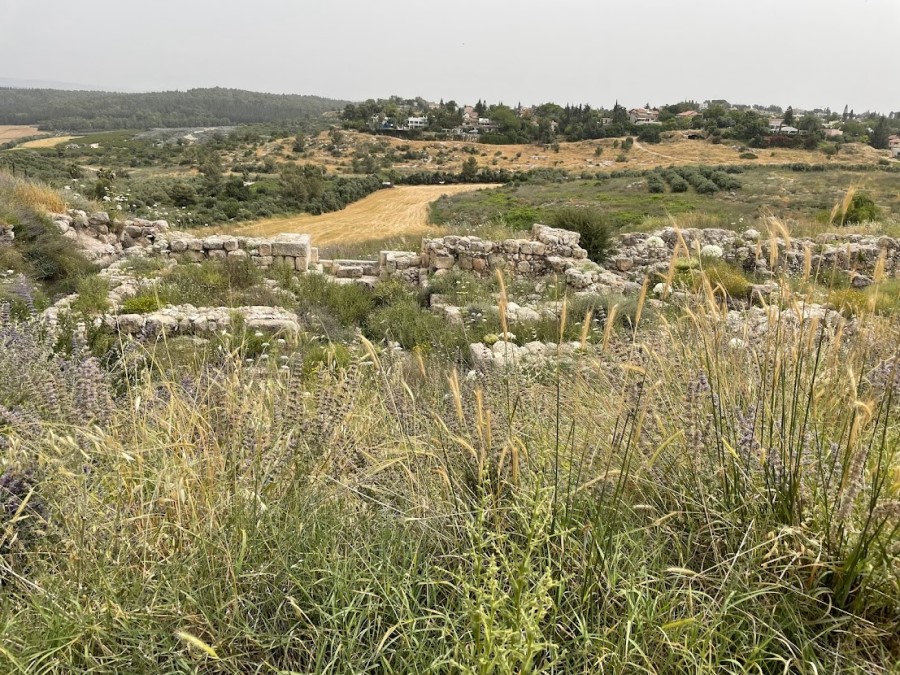
    Our last stop for the day (in 100 degrees Fahrenheit heat!) was Tel Gezer, the mound of ancient Gezer’s ruin west of the Central Benjamin Plateau and northwest of Jerusalem. Because of Gezer’s highly valuable position overlooking the fertile Aijalon Valley, the north-south International Coastal Highway, and the two east-west routes from the coastal plain to/from the central hill country, Gezer was a vital city for Israel to control. However, though Joshua annihilated the king and army of Gezer during the conquest (Josh 10:33), faithless Israel failed to actually seize the city (Josh 16:10; Judges 1:29). Israel did not control Gezer until an Egyptian pharaoh conquered the city and gave it to King Solomon as part of a marriage alliance (1 Kings 9:15-17). Among other city structures, two gates have been uncovered at Tel Gezer: an earlier four-chambered Canaanite gate and a later Solomonic six-chambered gate (pictured above). City gates would have been important not only as a fortified, defensive entrance but also as a site for adjudicating legal disputes (cf. Ruth 4:1-12).

  • Israel Study Trip Day 4: South of Jerusalem

    Israel Study Trip Day 4: South of Jerusalem

    Shalom!

    While today was supposed to be focused on the Mount of Olives, an unexpected bike-marathon in the area meant we could not access the site. Therefore, instead, our trip leader took us to some other notable places south of Old Jerusalem. Here are a few highlights:

    Herodium

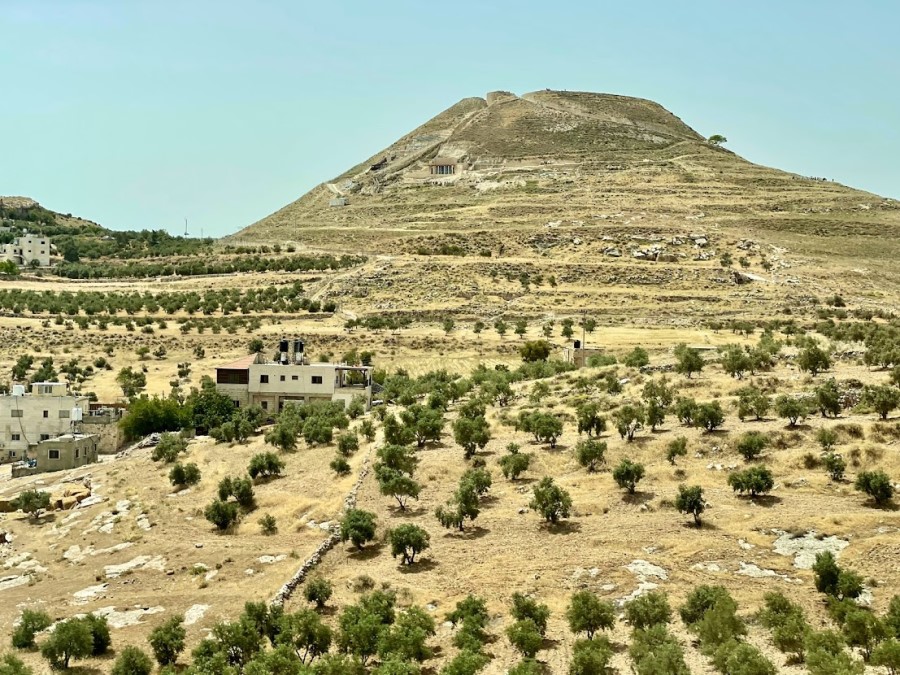
    Herod the Great (72-4 BC), who ruled Judea during Jesus’ birth (Mt 2:1), was a wicked man and a paranoid ruler. But he was a great builder. Herod built seven fortresses throughout Judea during his reign (including Masada), and he made one of those fortresses his burial place: Herodium. Herodium is about 7.5 miles southeast from Jerusalem on a hill within the arid West Bank. In Herod’s day, this fortress-palace featured all the amenities of an aspiring ruler in the Roman world: a swimming pool, theatre, art gallery, and even Roman-style baths. However, as Herod neared death, he ordered a mausoleum for himself to be constructed on the side of the hill. He also decreed that, after he died, the other amenities on site were to be demolished and buried so that all who looked toward Herodium would only see his mausoleum (which would have been visible even from the Mount of Olives). Herod’s wishes were carried out upon his death. However, Jewish Zealots then destroyed Herod’s mausoleum just a few years later.

    Bethlehem

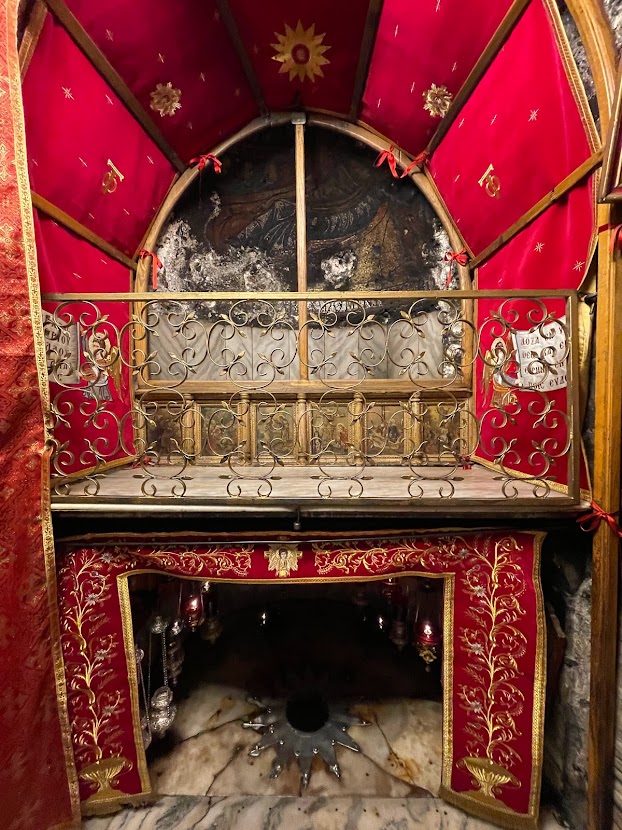
    The city of Boaz, Ruth, King David, and Jesus was just a small town in both the Old and New Testament eras and about 6 miles south of Jerusalem (within the West Bank today). Bethlehem was built on a limestone hill with thin topsoil, meaning that, agriculturally, the town could only support limited farming and shepherding activity. However, the hill of Bethlehem contained many natural caves, and residents of Bethlehem often built their homes near or right on top of these caves; after all, the caves served as excellent shelters for animals during part of the year. A Bethlehem cave, then, likely played a crucial role in Jesus’ birth. As Luke reports, there was no room in the “inn” or, more literally, the “guest room” of Joseph’s relatives in Bethlehem (probably because another visiting family already occupied the space). Therefore, the hosting family probably provided room for Joseph and Mary in a cave normally used for animals. Thus, Jesus was born in a manger (Luke 2:7). A church was later built over the reported spot of Jesus’ birth in the fourth century AD, and, though that church went through several reconstructions over the centuries, it still stands today as the Church of the Nativity in modern Bethlehem. Inside the church is a space with a small glass portal over what could be the original rock floor of Jesus’ birth cave.

    Ketef Hinnom

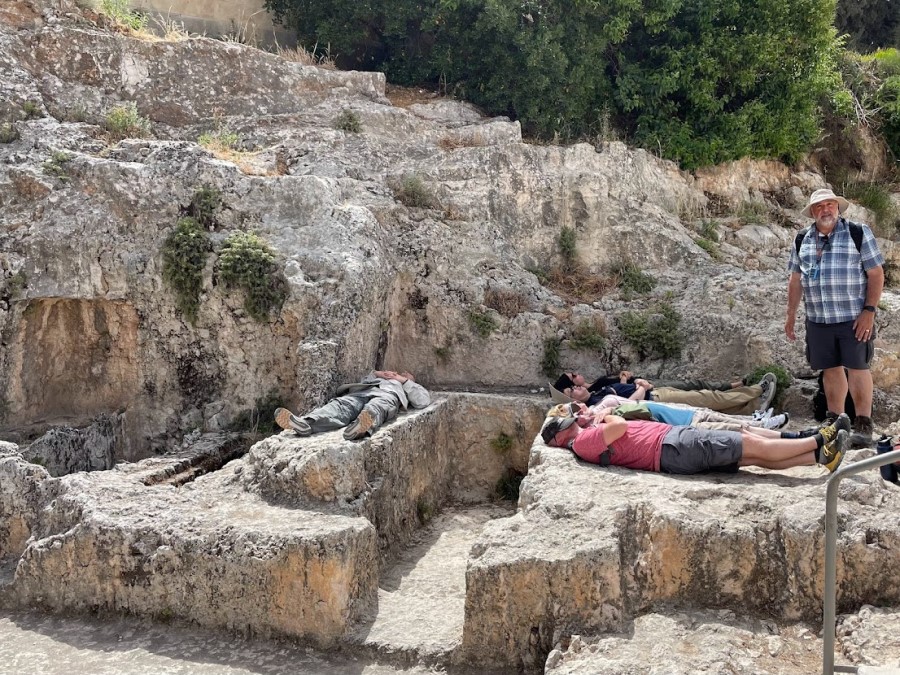
    The Hinnom Valley formed the border of western and southern Jerusalem in biblical times. Though the valley is infamous in its own way (see Jer 7:31-32 and the NT Greek term “gehenna”), the southwest ketef or “shoulder of” Hinnom became the source of a notable Bible discovery in modern times. It turns out that the slope of the southwest hill opposite Jerusalem was used in the OT era for tombs, and one of these tombs remained unspoiled until discovered by archaeologists in 1979. Among the unearthed artifacts in this tomb was a pair of tiny silver scrolls dated to the 600s BC; each scroll was wrapped up with a hole in the middle. Researchers took three years to develop a technique to unwrap the scrolls without destroying them, but, when the researchers had their technique, they finally were able to read the scrolls’ paleo-Hebrew inscription. The inscription was the same on both scrolls: the words of the famous priestly blessing recorded in Numbers 6:24-26; the tiny scrolls were likely worn as part of necklaces. The Ketef Hinnom scrolls are a doubly remarkable discovery: they are the oldest portion of Scripture ever recovered (even predating the Qumran scrolls), and they are affirmatory evidence that at least some words of the OT were known and valued by the people of Judah during the seventh century BC.

  • Israel Study Trip Day 3: Jerusalem’s Eastern Hill

    Israel Study Trip Day 3: Jerusalem’s Eastern Hill

    Shalom!

    Today’s itinerary focused on Jerusalem’s eastern hill, the oldest and most important part of Jerusalem throughout Bible times. We started in the north and moved our way south as the sun grew hot and challenged our endurance.

    Temple Mount

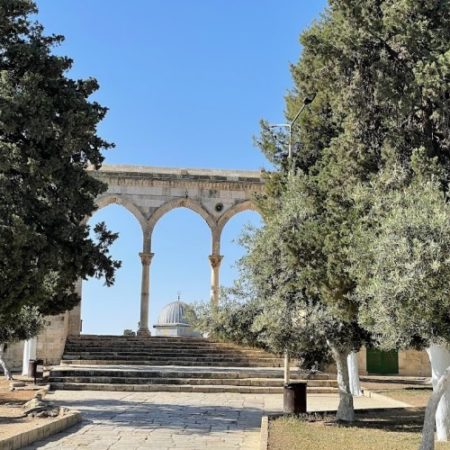
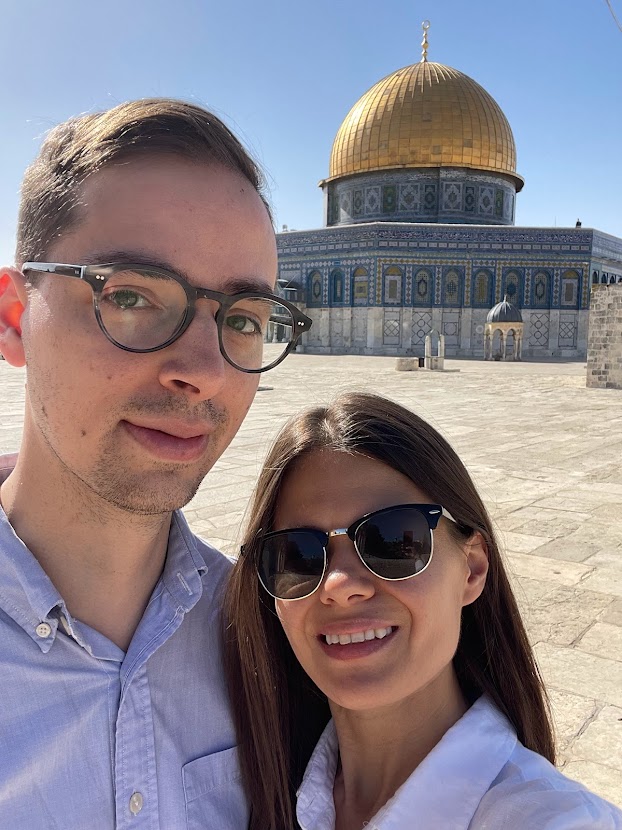
    We started our morning by finally visiting the Temple Mount. There is too much to write about the temple area, gates, and supporting structures in one paragraph, so for now I’ll stick to a few bare impressions. The raised temple platform as built by Herod the Great (and recreated to some extent by later Muslim rulers) is very large, between 25-30 American football fields in area. Aside from the grand expanse of space, however, the modern site is not quite as I expected with so many olive trees (see cover photo), stray cats, and trash cans throughout the place. The Dome of the Rock, the decorative mosque which dominates the central area of the platform, likely sits on the exact site of the destroyed Jewish temple and the lost Holy of Holies.

    Pool of Bethesda

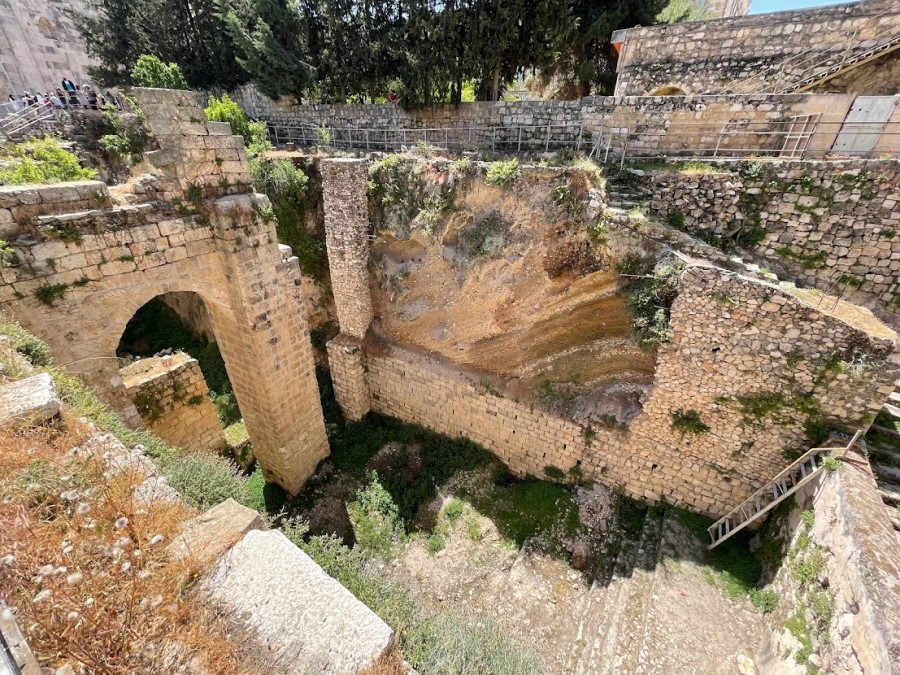
    Close by the Temple Mount to the NW is the partially uncovered Pool of Bethesda, where Jesus once healed a lame man (John 5:1-17). The pool was actually two large cisterns for collecting rain water (80 feet deep in the deepest areas); the pools were perhaps also fed by a small underground spring. The southern pool (and perhaps the northern pool, too) had steps on the west side for wading in and for performing ritual baths. Crusaders later built a church over and between the two pools. The ruin of the southern pool is visible today.

    City of David

    Below the Temple Mount on the eastern hill is the City of David, the oldest and original section of Israelite Jerusalem. Though part of this section has modern buildings and homes on it today, archaeologists have discovered a large stone structure at the top of the City of David that was likely King David’s fortress-palace. This building’s height over the city played a key defensive function but also inadvertently led to David’s great sin (see 2 Sam 11:2). Elsewhere in the City of David, archaeologists have discovered a giant support structure for David’s palace, various royal clay seals, a column capital decorated in the royal style, and the house of an ancient royal bureaucrat. These discoveries have affirmed several specific historical details in the Bible and are consistent with the Bible’s overall historical narrative.

    Hezekiah’s Tunnel

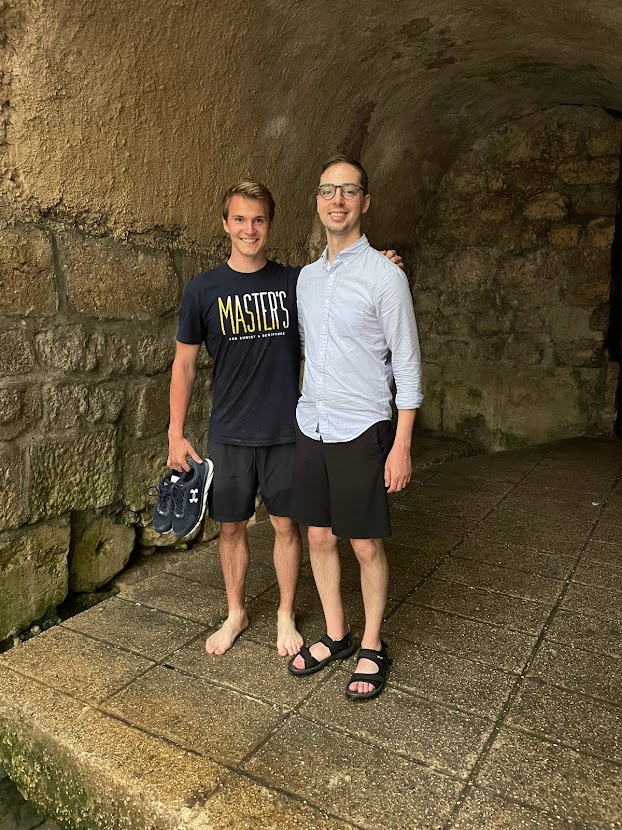
    One challenging but refreshing part of our day was walking through Hezekiah’s Tunnel. When King Hezekiah prepared for Assyria’s invasion around 714 BC, he didn’t just build walls, he also diverted the waters of the Gihon Spring on the edge of Jerusalem underground to a pool area inside the city, what would come to be known as the Pool of Siloam (cf. 2 Chronicles 32:30). To do this, Hezekiah’s men, armed with only simple hammers and chisels, carved a 1750 foot tunnel through mountain rock in just three years. The work is still regarded as an engineering marvel today. The tunnel is pretty narrow, and at times quite short in height. Cool water still flows through it, mostly to mid-calf.

    Pool of Siloam

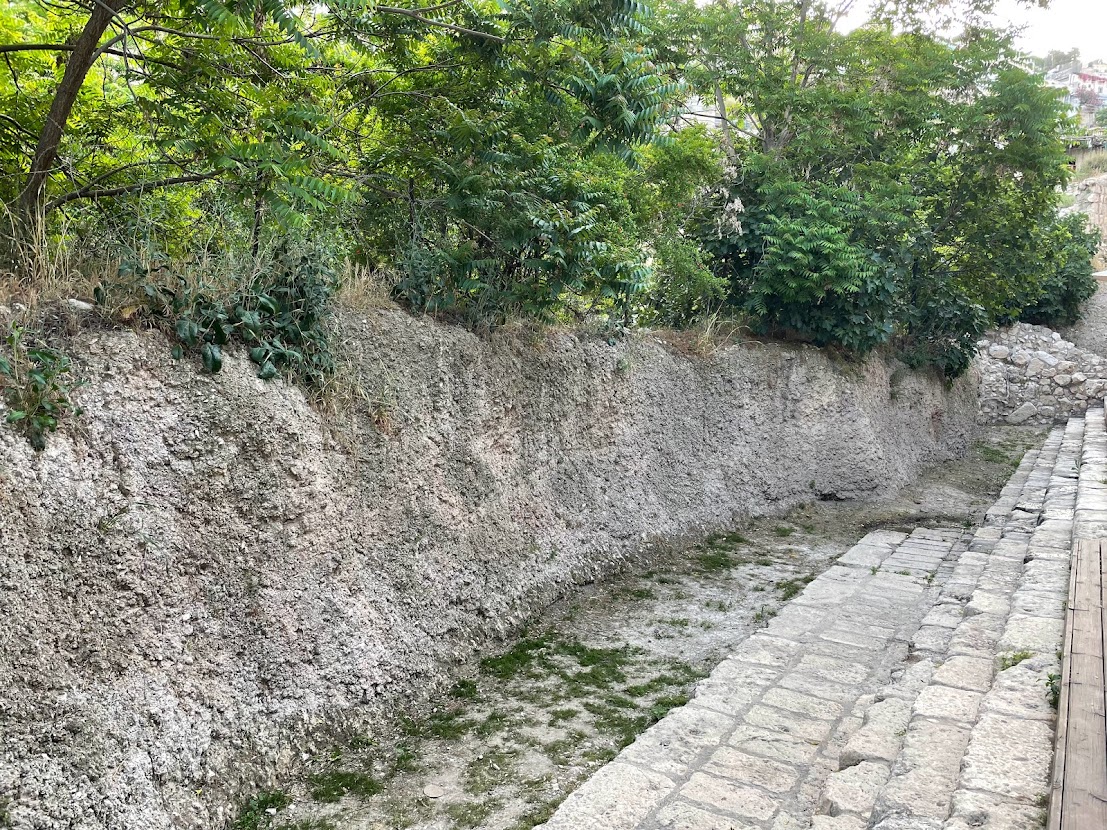
    Our final site for the day was the uncovered portion of the Pool of Siloam, the outlet of Hezekiah’s tunnel in southern Jerusalem. The Pool of Siloam is where Jesus once sent a faith-filled blind man to wash away the clay Jesus had made and placed on the man’s eyes (John 9:1-41). The pool was very large, trapezoidal in shape, and featured ten steps all around for wading in, thus serving as a mikvah, or ritual bath site, like the Pool of Bethesda.

  • Israel Study Trip Day 2: Learning Jerusalem’s Geography

    Israel Study Trip Day 2: Learning Jerusalem’s Geography

    Shalom!

    Our study commenced in earnest on our second day in Jerusalem. After a preliminary time of teaching at our hotel in the morning, we visited several sites in the city to help us get a firmer understanding of Jerusalem’s geography and development during different periods of Bible history.

    David’s Citadel

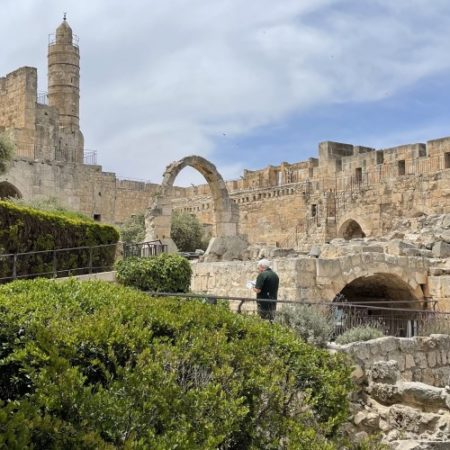
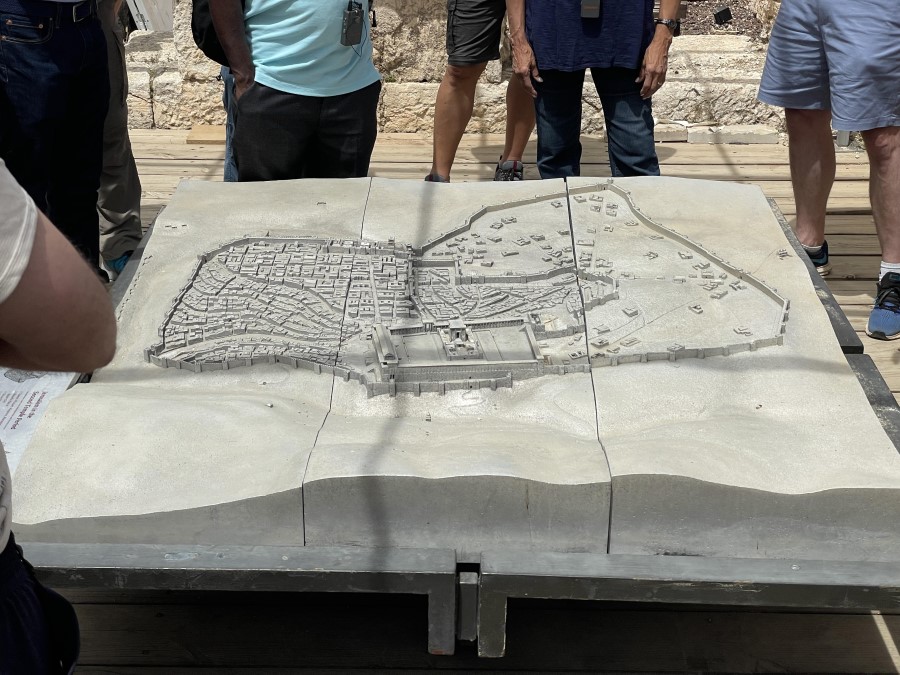
    We started the day at David’s Citadel/Tower, one of many sites in Old Jerusalem with a misleading name. The site has nothing to do with King David but was given this name by Roman Christians during the Byzantine period (AD 324-638). The citadel was originally a fortress built on part of the west city wall of Hasmonean Jerusalem (intertestamental period) and then later expanded and incorporated into Herod the Great’s palace complex (first century AD). The version standing today is the sixteenth century battlement created by the Ottoman Turks under Suleiman the Magnificent, hence the high medieval look (see cover photo). Aside from its NT connection, the citadel provides a great view of the city and also features various topographical map sculptures of Jerusalem in different points in history. Also, one room of the citadel, the Kishle, served as a dungeon throughout the centuries and may have been where Pilate had Jesus flogged before Jesus’ crucifixion.

    Burnt House

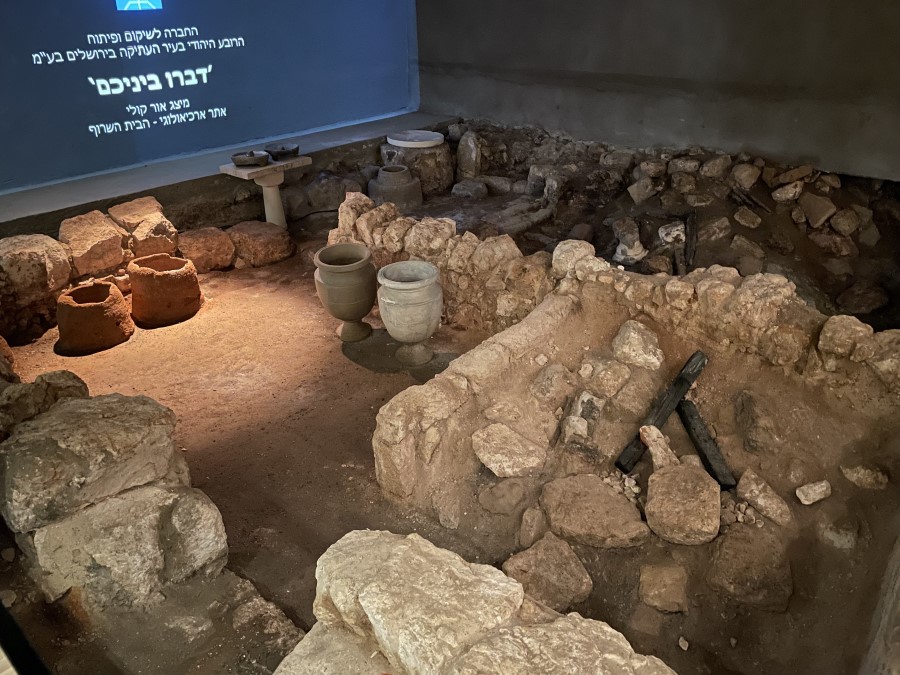
    We next visited the Burnt House, the basement of a first century Jewish home likely destroyed in the Roman attack on Jerusalem in AD 70. Besides exhibiting signs of destruction by fire (hence the name), the home has a number of significant artifacts that indicate that it likely belonged to a wealthy, priestly family. Among the finds were stone cups and bowls (which could not be made ritually impure and were expensive to make), an iron spearhead, and a young woman’s severed arm.

    Broad Wall

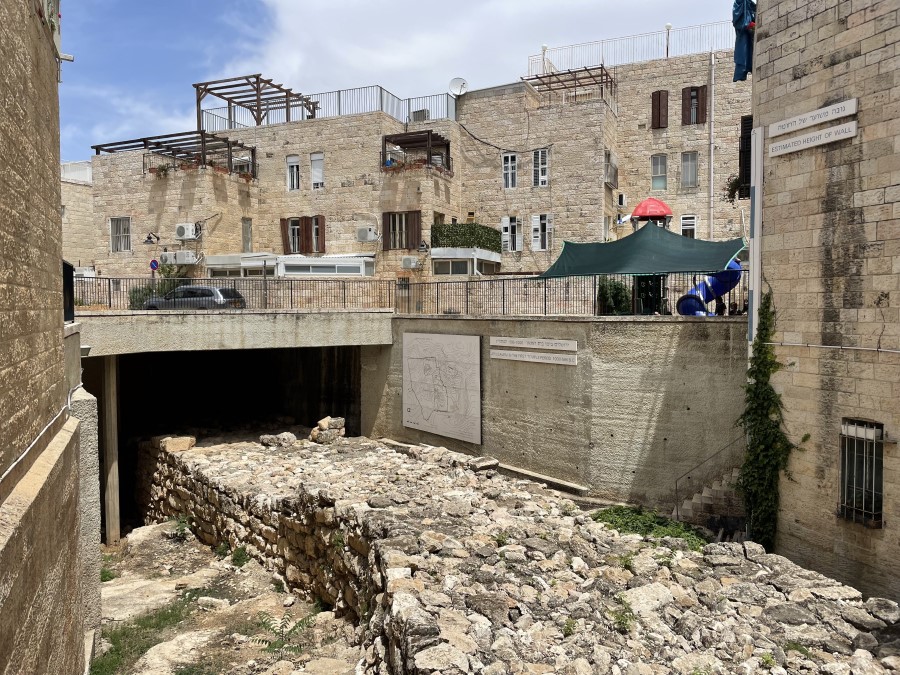
    Another site we visited today is the Broad Wall, which is an uncovered portion of the wall constructed by King Hezekiah in preparation for Assyria’s invasion around 712 BC (cf. 2 Kings 18:7, 13). Before Hezekiah, only the eastern hill of Jerusalem, the hill containing the City of David and Solomon’s Temple, was fortified. Hezekiah, however, enclosed a large portion of Jerusalem’s western hill (today called “Mount Zion” due to an erroneous attribution by medieval crusaders) within city walls. This new wall addition was formidable since it stood above the steep Hinnom Valley, which bounded ancient Jerusalem on the south and west. However, the northern section of the new wall did not have as deep a valley below, which meant the northern wall was more vulnerable to attack. To counter this vulnerability, Hezekiah made the northern wall extra thick: while the other sections of wall were about three meters thick, the northern wall was eight meters thick. The uncovered section of this “broad wall” no longer has its full height, but you can still see its mighty thickness. Furthermore, you can even see (though not in the above picture) the foundations of homes that were destroyed to make way for the wall’s construction. Dr. G noted our viewing of the Broad Wall in connection with Isa 22:8-11; making wise defensive preparations is good, but one must ultimately depend on God. Hezekiah lived by that truth, but the people of Judah often did not.

    Upper Room

    There are several sites in Jerusalem that might have served as the site of the last supper, but the one Dr. G took us to as the most probable location is known as the Cenacle or “Upper Room” in the Church of the Apostles on Mount Zion. The original first century building was, of course, lost in Jerusalem’s AD 70 destruction; the building standing on the spot today is a medieval construction. However, this later building was constructed upon several layers of previous constructions. One of the lower layers dates to the first or second century AD and appears to have served as a synagogue as the building had a discernable niche for storing the Scriptures. Intriguingly, this niche points exactly in the direction of the Church of the Holy Sepulcher, that is, the site of Jesus’ crucifixion, burial, and resurrection. The first-second century building, then, likely served as an early Jewish-Christian church (before church buildings were a thing), just as several early church writers also attest. If so, the synagogue-church may have been built on the same spot as Jesus’ last supper in commemoration.

    Steps to Gethsemane

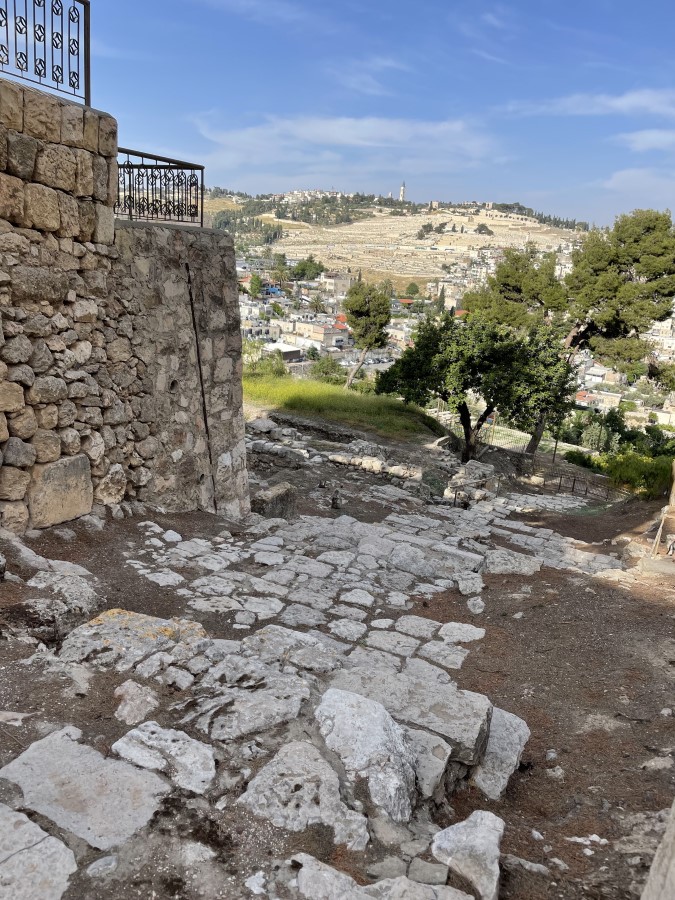
    Our final stop for the day was a set of stone steps outside the Church of St. Peter in Gallicantu. There is some debate as to whether the steps are from the first century or the sixth century AD. If they are from the first century, then these would be the very same steps that Jesus took with his disciples to Gethsemane on the night of his betrayal; Jesus would have traveled from the last supper in the Upper Room down the steps to a southern gate of Jerusalem to cross the Kidron valley and arrive at the base of the Mount of Olives (cf. Mt 26:30).

  • Israel Study Trip Day 1: Arrival in Jerusalem

    Israel Study Trip Day 1: Arrival in Jerusalem

    Shalom from Jerusalem!

    As we get ready for another day here (Israel is seven hours ahead of NJ), here are three summary snapshots from our long travel day yesterday.

    A Good Flight

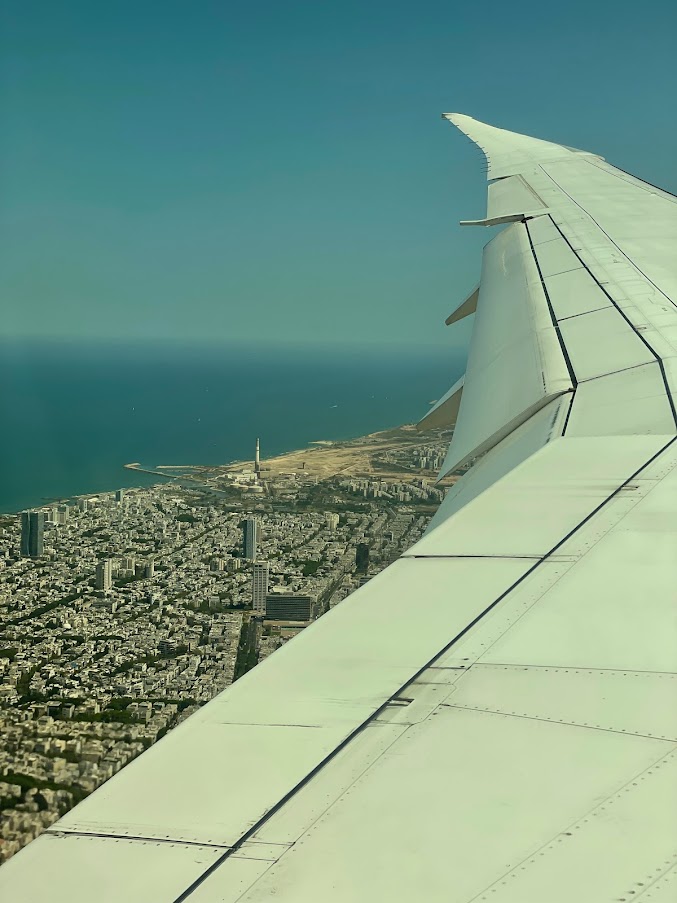
    Our flight was scheduled to take off from Newark at 4:30pm, but a mechanical problem (dented cargo door) delayed the flight by about 1.5 hours. This unexpectedly led to a gospel conversation with my seatmate, a middle-aged Jewish woman named Jill. Jill told us that she was part of a birthright moms trip to Israel that was all about bringing back Judaism to American families. When we told her that we were on a seminary study trip, she got really excited—because she thought we were Jewish! But when we told her that we were Christian, she was shocked. She asked me a question about whether believing in hell was supposed to lead Christians to good works, and I tried to explain to her from the Old Testament that good works could never save anyone, that even Abraham was justified by faith, and that God could only be both just and merciful in saving sinners by providing a once and for all sacrifice—which is what God did in Jesus! The conversation petered out after that. When the flight did get going, it was pretty smooth, and both Ema and I amazingly were able to sleep most of the way. After arrival into Tel Aviv, we felt very little jet lag.

    Remembering the Cost

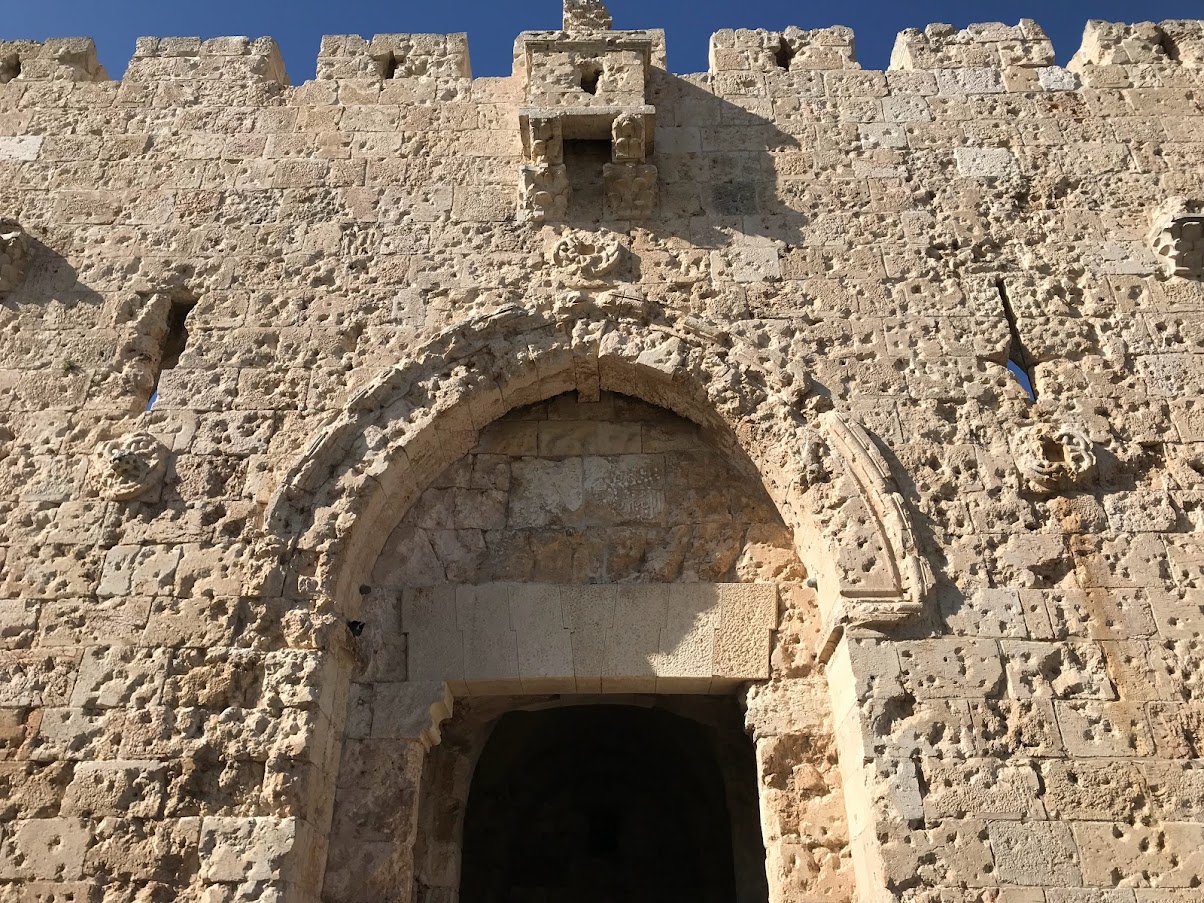
    Our first day was mostly about travel and adjustment, so nothing big was on the agenda. However, our trip leader, Dr. Grisanti (the students often call him “Dr. G”) did provide us with some fundamental overviews about Israel, Jerusalem, and Jerusalem’s important sites. Something that stuck out to me, though, both on the way to Jerusalem and in Jerusalem itself is Israel’s purposeful commemoration of its history and of the cost endured for Israel’s existence. For example, on the highway from Tel Aviv to Jerusalem, we passed a few rows of destroyed/disabled Israeli combat vehicles, while, in Jerusalem, a certain gate into the Jewish quarter still displays the damage done to the stone gate by bullets and shrapnel. Israel, of course, could have cleared the wrecks and repaired the gate but chose instead to preserve the memory of the struggles in its 1948 and 1967 wars and of the Jewish lives lost. Dr. G also mentioned that one of the reasons why Israel today is so committed to archaeological discovery and preservation within its borders is because Israel desires further proof that Israel’s history is true and that the country has the right to exist.

    Praying at the Wall

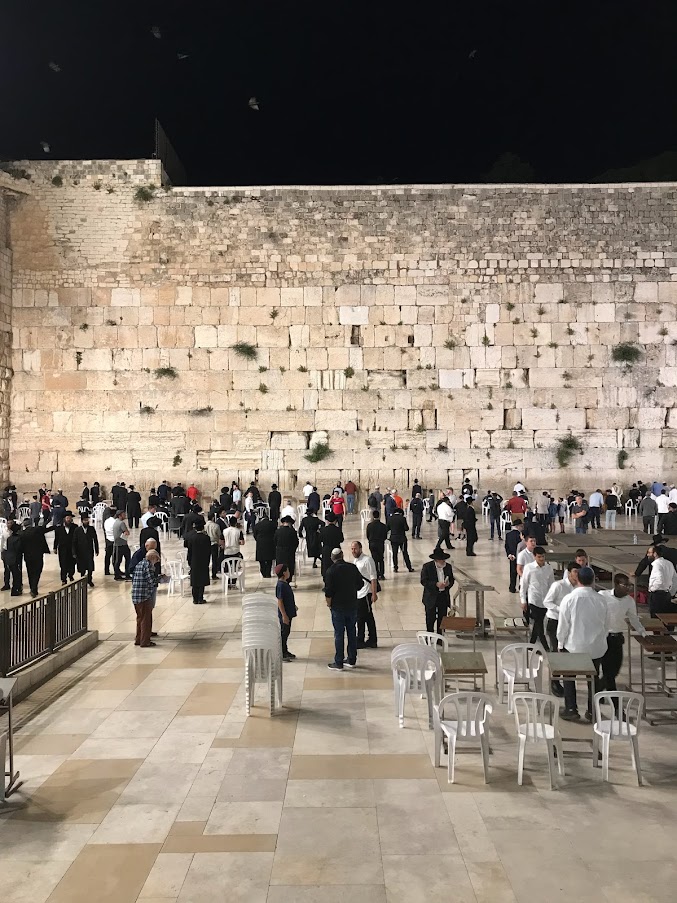
    To help keep the group awake and able to more successfully adjust to the new time zone, Dr. G took us on an evening excursion to the Western Wall. Formerly known as the “Wailing Wall” when Jewish access to the site was more limited, the Western Wall of the Temple Mount is still considered one of the most sacred places for Jews to study and pray. According to Dr. G, Israel’s chief rabbi has forbidden observant Jews from stepping foot on the Temple Mount (lest they accidentally step where the Holy of Holies used to be). Thus, the Western Wall is the closest pious Jews can currently get to the Holy of Holies. Non-Jews are also allowed access to the site under certain conditions; we were asked to cover our heads with a hat or yarmulke and refrain from conversation or cell phone usage. As I walked through the men’s section of the Western Wall (women have a separate section), I was struck by how fervently many of the Jewish men were praying. I thought of Paul’s words in Romans 10:2, “For I testify about them that they have a zeal for God, but not in accordance with knowledge.” I slowly approached the wall myself to pray; with my hand on the wall, I thanked the Lord for the free access I and my fellow believers have to God through Christ apart from any well or temple, I prayed for God to open the eyes of the Jewish people—especially Jill who I spoke to this morning—-and I asked the Lord Jesus to return soon and set up his kingdom.

  • Israel Study Trip Day 0

    Israel Study Trip Day 0

    As some of you know, I will be going on a trip next week. Before I graduated from The Master’s Seminary, I had signed up to go on the school’s annual study trip to Israel, but the onset of Covid and travel restrictions meant that the trip had to be postponed. However, because the Covid situation has improved so much in the last year, the trip is finally proceeding, which means that, from May 9 to May 30, my wife and I will be in Israel.

    Our group of thirty-five students, professors, friends of the seminary, and spouses will travel to all the important biblical sites in Israel; we will spend about five days in Jerusalem, then a week in southern Israel (Judea/Negev/Dead Sea regions), and then a week in northern Israel (Samaria/Galilee/Jordan Valley regions). Though there will be time to enjoy some good food and leisure activities while in Israel, this trip is a study trip, which means the emphasis will be on learning. And there will be homework. But the homework is actually a good thing; our trip leader has told us repeatedly that the homework and quizzes will enable us to get the most out of our trip and help us better remember what we learn.

    One of my main homework assignments will be to keep a journal, recording what I see, think, and learn each day. Therefore, rather than publish midweek meditations as I normally do the next few weeks, I plan instead to upload my journal entries (with pictures) so that you can, in a way, travel with me on this study trip. I anticipate the uploads occurring at the end of each day in Israel, but, depending on the rigor of the trip, my publishing timing may vary.

    As preparation for the coming mini-travelogue, I recommend you watch this Sunday school video I recorded as an introduction to biblical geography. The background information will no doubt provide a good framework for the more specific information I later report from the field.

    I am excited to share this trip with you all, and, of course, I appreciate your prayers. Lord willing, my next post to you will be from Jerusalem.

    Lehitraot!
    (“See you later!” in Hebrew)

  • We Are Raised with Christ

    We Are Raised with Christ

    As we come to the end of our month of Easter celebration, I find myself thinking about the last stanza of Keith Getty’s and Stuart Townsend’s modern hymn, See What a Morning. The last stanza reads:

    And we are raised with Him
    Death is dead, love has won, Christ has conquered
    And we shall reign with Him
    For He lives, Christ is risen from the dead!

    Consider the phrase “we are raised with Him.” Have you ever wondered whether this is true biblically, and, if so, how? The marvelous truth is that our Lord’s resurrection is not merely a stunning historical fact or a crucial element of the saving gospel. Actually, because of the believer’s mysterious union with Christ obtained by faith, Christ’s resurrection is a reality which the believer himself shares with his Lord. According to the New Testament, believers share in Christ’s resurrection in three main ways.

    Past Resurrection

    The first way that believers are raised with Christ is in a past sense. The clearest explanation of believers’ past resurrection appears in Ephesians 2:1-10. Right after detailing how dead, damned, debased, and distant we believers once were before God because of sin, Paul declares that God, in great love and mercy,

    Even when we were dead in our transgressions, made us alive together with Christ (by grace you have been saved), and raised us up with Him, and seated us with Him in the heavenly places in Christ Jesus. (Eph 2:5-6)

    Notice all the past tense verbs in the NASB translation; Christ’s death and resurrection fundamentally changed the state of believers! We were raised up with him, which means that we who were dead are now alive, we who were damned are now rescued, we who were debased are now cleansed and exalted, and we who were distant are now brought near—even seated in the very throne room of God in heaven! Our resurrection with Christ means that our salvation is full and forever secure, which is a cause for utmost joy, peace, and praise!

    Present Resurrection

    But past resurrection flows right into another aspect of resurrection that believers share with Christ: present resurrection. In his Sunday sermon on baptism, Pastor Babij mentioned Romans 6:4-5, where Paul talks about how believers experience resurrection life now:

    Therefore we have been buried with Him through baptism into death, so that as Christ was raised from the dead through the glory of the Father, so we too might walk in newness of life. For if we have become united with Him in the likeness of His death, certainly we shall also be in the likeness of His resurrection.

    In other words, Christ’s resurrection didn’t just affect believers positionally but also practically: we have been given new life in Christ to walk differently in the world right now! How exactly? Paul clarifies later in Romans 6: by considering ourselves dead to sin and alive to God in Christ Jesus and by no longer presenting our bodies as instruments of sin but as instruments of righteousness (Rom 6:11-14).

    Really, our present resurrection with Christ not only enables us but also obligates us to walk in a life of new holiness (cf. Rom 8:12-13). Thus, there is a participatory aspect to present resurrection in which we must choose by faith to walk in the resurrected life we have from Christ, with resurrected thoughts, words, and actions (cf. Rom 6:17-19; Col 3:1-5; Eph 4:17-24).

    Future Resurrection

    The third and final way that believers are resurrected with Christ is the one we probably talk about most: future resurrection. Paul asserts memorably at the end of his argument for believer’s future resurrection in 1 Cor 15:

    Behold, I tell you a mystery; we will not all sleep, but we will all be changed, in a moment, in the twinkling of an eye, at the last trumpet; for the trumpet will sound, and the dead will be raised imperishable, and we will be changed. For this perishable must put on the imperishable, and this mortal must put on immortality. (1 Cor 15:51-53)

    This is the aspect of Christ’s resurrection we have not yet experienced. We still live in weak bodies that are subject to pain, futility, and death (cf. Rom 8:22-23). But Paul declares that one day—no longer! We shall be changed! We shall be clothed just as our Lord was in his resurrection: with powerful, glorious, and immortal bodies (1 Cor 15:42-49).

    And how should this fact of future resurrection affect us now? Paul gives the answer throughout his letters: by filling us with hope and perseverance amid all the toil and trials of life (1 Cor 15:58; 2 Cor 4:13-18; Rom 8:24-25).

    Conclusion

    Though our special season of meditating on Christ’s resurrection is ending, the reality of our shared resurrection with Christ is not. Christ has been raised, and so have we who have believed in him. We were raised, are raised, and will be raised in Him. May these truths now fill us with confidence in our once and for all salvation, with a commitment to live out the resurrection life we have received, and with a perseverant hope that our suffering is not in vain in the Lord.

    Questions to Consider:
    1. If your resurrection was fully accomplished for you in the past in Christ, can you add anything by good works now to complete your resurrection?
    2. Do you walk in holy resurrection life right now? If not, what does this suggest about your spiritual state?
    3. Are you looking forward to the resurrection life to come? How will it be so much better than what you know right now?

  • Passion Week Meditations

    Passion Week Meditations

    Rather than wait till Wednesday to publish a meditation for this Holy Week/Passion Week, I thought that we might benefit from a series of meditations to use throughout the week. Below is a harmony of the Gospels for Jesus’ final week in Jerusalem (taken from A Harmony of the Gospels by Robert L. Thomas and Stanley N. Gundry). I encourage you, in addition to your regular Bible study, to read and meditate on the scriptures that correspond to each day of this week.

    Sunday
    Triumphal Entry
    Matthew 21:1-11, 14-17; Mark 11:1-11; Luke 19:29-44; John 12:12-19

    Monday
    Cursing of the Fig Tree
    Matthew 21:18-19a; Mark 11:12-14
    Second Cleansing of the Temple
    Matthew 21:12-13; Mark 11:15-18; Luke 19:45-48
    Request of Greeks
    John 12:20-50

    Tuesday
    Withered Fig Tree
    Matthew 21:19b-22; Mark 11:19-25
    Challenge of Christ’s Authority
    Matthew 21:23-27; Mark 11:27-12:44; Luke 20:1-21:4
    The Olivet Discourse
    Matthew 24:1-25:46; Mark 13:1-37; Luke 21:5-38

    Wednesday
    Arrangements for Betrayal
    Matthew 26:1-16; Mark 14:1-11; Luke 22:1-6

    Thursday
    The Last Supper
    Matthew 26:17-29; Mark 14:12-25; Luke 22:7-38; John 13:1-38
    The Upper Room Discourse
    John 14:1-17:26
    Gethsemane
    Matthew 26:30-46; Mark 14:26-42; Luke 22:39-46; John 18:1
    Betrayal and Arrest
    Matthew 26:47-56; Mark 14:43-52; Luke 22:47-53; John 18:2-12

    Friday
    Trial – First Jewish Phase (Before Annas)
    John 18:13-24
    Trial – Second Jewish Phase (Before Caiaphas and Sanhedrin)
    Matthew 26:57-75; Mark 14:53-72; Luke 22:54-65; John 18:25-27
    Trial – Third Jewish Phase (Before the Sanhedrin)
    Matthew 27:1; Mark 15:1a; Luke 22:66-71
    Remorse and Suicide of Judas Iscariot
    Matthew 27:3-10
    Trial – First Roman Phase (Before Pilate)
    Matthew 27:2, 11-14; Mark 15:1b-5; Luke 23:1-5; John 18:28-38a
    Trial – Second Roman Phase (Before Herod Antipas)
    Luke 23:6-12
    Trial – Third Roman Phase (Before Pilate)
    Matthew 27:15-26; Mark 15:6-15; Luke 23:13-25; John 18:38b-19:16
    Crucifixion
    Matthew 27:27-56; Mark 15:16-41; Luke 23:26-49; John 19:17-30
    Burial
    Matthew 27:57-61; Mark 15:42-47; Luke 23:50-56; John 19:31-42

    Saturday
    Roman Guards Stationed at the Tomb
    Matthew 27:62-66

    Resurrection Sunday
    Resurrection and Appearances
    Matthew 28:1-15; Mark 16:1-14; Luke 24:1-43; John 20:1-25

  • Don’t Let Them Keep You Away

    Don’t Let Them Keep You Away

    One application Pastor Babij gave in his recent sermon on Jude 17-19 is that, in light of the danger of false teaching, we Christians need to grow in our knowledge of the Bible. Pastor Babij has actually been giving this exhortation throughout his series on Jude, and such counsel is to be taken seriously. After all, one of the trademarks of false teachers throughout history is that they try to keep people from the Bible. This evil goal might be accomplished in a number of ways; consider four:

    1. Claim Bible Corruption. One of the most straightforward ways to discourage people from learning the Bible is to assert that the Bible has been corrupted and is therefore no longer trustworthy. This is a common claim from secularists but also appears in world religions, including Islam, Mormonism, and the so-called “higher criticism” of Christianity. In most cases, those claiming corruption do not offer any specific proofs. In the few cases where such proofs are offered, the proofs are easily debunked as simple misunderstandings of the Bible or as born from hostile and unprovable assumptions against the Bible. Nevertheless, the assertion of corruption is incredibly convenient, since it allows a false teacher to proclaim his own teaching without any sort of check from God’s word (cf. Acts 17:11).

    2. Proclaim New Revelation. Often going hand-in-hand with claims of Bible corruption, another way a false teacher can keep people away from the Bible is by proclaiming that God has given that teacher fresh divine revelation. This new revelation seems to supersede and correct whatever revelation came before as well as provide more directly relevant and exciting instruction for believers today. Such a tactic is at the heart of Islam and Mormonism but is also prominent in Charismatic Christianity. Those proclaiming a new word from God often claim exclusive authority in revelation and so do not subject themselves to Scripture or other prophets (cf. 1 Cor 14:30-33). Furthermore, since these prophets lack the miraculous signs and perfect accuracy of a true prophet of God (2 Cor 12:12; Dt 18:20-22), they ultimately have no credentials beyond their own proud assertions and reported mystical experiences.

    3. Assert Authoritative Tradition. A more subtle version of proclaimed new revelation is to assert an authoritative tradition accumulated from various religious teachers over the centuries. This tradition not only functions as an equally binding source of revelation to the Bible itself but also becomes the necessary lens through which one must interpret the Bible. In practice, then, a believer is expected to pay more attention to the religious tradition than to what God actually said in his Word. This kind of obfuscating tradition notably appears in Catholicism, Eastern Orthodoxy, and Judaism. The problems with authoritative tradition, however, are similar to those in new revelation: aside from the fact that God himself warned against extra-biblical authoritative tradition (Isa 29:13; Mt 15:1-9), the religious traditions frequently contradict both themselves and a plain reading of the Bible.

    4. Give Mere Lip-Service. Perhaps the most insidious way to move people away from the Bible is for one to assert in speech how much he values the Bible while in practice he emphasizes everything but the Bible. A person might sprinkle in Bible verses now and then into his teaching or cherry-pick certain passages of Scripture to make a point, but the reality is that the religion is more about proclaiming man’s ideas and meeting felt needs than declaring the truth of God. So many forms of popular Christianity have gone down this path, whether by focusing on prosperity or politics, social activism or seeker-friendlyism, music or miracles. Pastors often end up only telling stories, giving motivational speeches, or proclaiming their own opinions. If ever confronted by their own lack of Bible-content, such teachers might either appeal to new divine revelation or feign humility and say that deeper Bible teaching is beyond their ability or calling (cf. 2 Tim 2:15).

    Now, not all false teachers are fully conscious of their using the above to keep people away from the Bible, but there is another group who definitely is: Satan and his demons. We must remember that, as Paul says in Ephesians 6:12, our struggle is not ultimately against people but against demonic potentates who want to keep unbelievers in darkness and to cause believers to stumble and become ineffective as witnesses of Christ. Because of both the personal and global stakes in the war for divine truth, then, let us by God’s Spirit and grace not let anyone keep us from the Bible—not false teachers, not demons, and not our own sinful flesh.

    Ephesians 6:13, 17, Therefore, take up the full armor of God, so that you will be able to resist in the evil day, and having done everything, to stand firm…And take the helmet of salvation, and the sword of the Spirit, which is the word of God.

    Questions to Consider:
    1. Why would false teachers and demons want so much to keep people from the Bible, even while allowing people to enjoy the trappings of religion or Christianity?
    2. Despite the shaky foundations of the four approaches listed above, why are many people still so attracted to false teaching over the Bible?
    3. Is something keeping you from the Bible? How should you respond in light of the above?